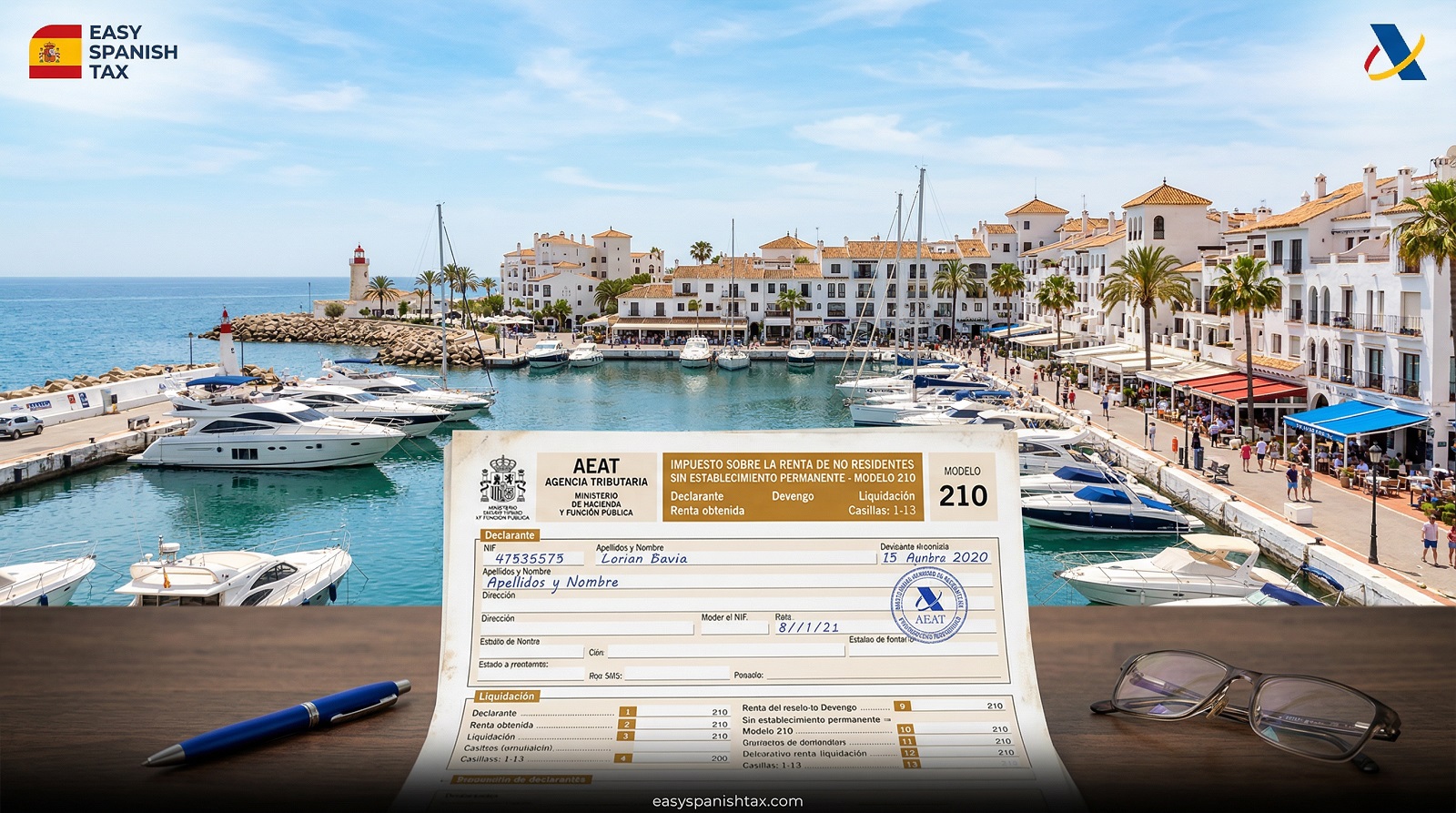
Penalidades, Riscos e Como Corrigir (Guia 2026)
O Que Acontece Se Você Não Declarar o Modelo 210?
Many non-resident property owners in Spain are unaware that they must file Modelo 210 every year, even if their property is not rented out. As a result, thousands of foreign homeowners discover years later that they have missed one or more tax declarations.
A boa notícia é que perder uma declaração de Modelo 210 não significa automaticamente multas massivas. As consequências dependem em grande parte de você corrigir a situação voluntariamente ou se a Agência Tributária Espanhola (Agencia Tributaria ou AEAT) descobrir a omissão primeiro.
Este guia explica o que acontece se você não declarar o Modelo 210, as possíveis penalidades e a melhor maneira de regularizar sua situação fiscal.
O Que É o Modelo 210?
O Modelo 210 é o formulário fiscal oficial espanhol usado por não-residentes para declarar rendimentos tributáveis na Espanha. Para proprietários de imóveis, ele se aplica comumente a:
Rendimentos imputados de uma casa de férias ou segunda residência.
Rendimentos de aluguel de um imóvel espanhol.
Imposto sobre ganhos de capital ao vender um imóvel na Espanha.
A obrigação de declarar o Modelo 210 é estabelecida sob as regras do Imposto sobre a Renda de Não Residentes (IRNR) da Espanha e administrada pela Agência Tributária Espanhola.
Preciso Declarar Mesmo Que Não Alugue Meu Imóvel?
Sim.
Uma das ideias errôneas mais comuns entre proprietários estrangeiros é que nenhum imposto é devido se o imóvel for usado apenas para férias.
A legislação fiscal espanhola geralmente exige que os não-residentes declare "rendimento imputado" em propriedades urbanas que estão disponíveis para uso pessoal, mesmo quando nenhum rendimento de aluguel é recebido.
Isso significa que possuir um imóvel na Espanha pode criar uma obrigação de apresentação anual, mesmo que o imóvel permaneça vazio durante a maior parte do ano.
O Que Acontece Se Você Perder o Prazo de Declaração?
As consequências dependem de como a omissão é descoberta.
Cenário 1: Você percebe o Erro e Declara Voluntariamente
Esse é geralmente o melhor resultado.
Quando os contribuintes submetem voluntariamente um Modelo 210 atrasado antes de receber um aviso formal das autoridades fiscais, a Espanha geralmente aplica sobretaxas em vez de penalidades fiscais.
As atuais regras de sobretaxa geralmente funcionam da seguinte forma:
Até 1 mês de atraso: 1% de sobretaxa.
Entre 1 e 12 meses de atraso: um adicional de 1% para cada mês de atraso.
Mais de 12 meses de atraso: 15% de sobretaxa mais juros de mora.
Em muitos casos, declarar voluntariamente pode reduzir significativamente as consequências financeiras.
Cenário 2: A Agência Tributária Espanhola Contata Você Primeiro
Se a AEAT descobrir a declaração faltante antes de você submetê-la voluntariamente, a situação se torna mais séria.
Além de encargos de juros, penalidades fiscais podem ser impostas. Dependendo das circunstâncias, as penalidades podem variar de 50% a 150% da dívida fiscal não paga.
O valor exato depende de fatores como:
O valor do imposto não pago.
Se a omissão foi considerada negligente.
Se houve ocultação deliberada.
Se o contribuinte cooperou durante a investigação.
É por isso que muitos consultores fiscais recomendam corrigir declarações perdidas o mais rápido possível.
Até Quando a Agência Fiscal Pode Retroceder?
A Espanha geralmente tem um período de limitação de quatro anos para a avaliação de impostos não pagos, embora circunstâncias específicas possam afetar esse prazo. Como resultado, proprietários de imóveis não residentes que perderam várias declarações podem ainda ser obrigados a regularizar anos fiscais anteriores.
Se você comprou seu imóvel há vários anos e nunca declarou o Modelo 210, é aconselhável revisar sua situação o mais rápido possível.
Receberei uma Multa Automaticamente?
Não necessariamente.
Muitos proprietários de imóveis entram em pânico ao descobrir que perderam uma declaração.
Na realidade, o resultado muitas vezes depende de quem toma a iniciativa primeiro. A correção voluntária geralmente resulta em um desfecho muito mais favorável do que esperar por um pedido formal da AEAT.
O sistema tributário espanhol encoraja os contribuintes a corrigir erros voluntariamente antes que os procedimentos de execução comecem.
Faltar ao Modelo 210 Pode Afetar a Venda do Meu Imóvel?
Potencialmente, sim.
Durante uma venda de imóvel, compradores, advogados e consultores fiscais costumam revisar a situação legal e fiscal da propriedade. Obrigações fiscais não resolvidas podem criar complicações e atrasos.
Embora muitas vendas sigam normalmente, questões fiscais pendentes podem exigir esclarecimento ou solução antes da conclusão.
Mantendo suas declarações do Modelo 210 em dia, você ajuda a evitar problemas desnecessários ao vender sua propriedade no futuro.
E Se Eu Tiver Perdido Vários Anos?
Essa situação é mais comum do que muitas pessoas percebem.
Muitos proprietários estrangeiros compraram uma casa de férias anos atrás e nunca foram informados sobre a exigência de declaração de imposto anual para não residentes.
Se você perdeu vários anos, a abordagem recomendada geralmente é:
Identificar quais anos estão pendentes.
Calcular o imposto devido para cada ano.
Submeter as declarações faltantes voluntariamente.
Pagar qualquer sobretaxa ou juros aplicáveis.
Tomar uma atitude antes de receber um aviso fiscal pode muitas vezes reduzir o custo total consideravelmente.
Razões Comuns Pelas Quais Proprietários de Imóveis Perdem o Modelo 210
Algumas das razões mais comuns incluem:
Acreditar que nenhuma declaração é necessária se o imóvel não estiver alugado.
Supor que o IBI cobre todos os impostos sobre propriedades.
Não receber lembretes da Agência Tributária Espanhola.
Mudar de endereço e perder correspondência.
Comprar através de um agente imobiliário sem receber orientações fiscais.
Infelizmente, a responsabilidade pela declaração permanece com o proprietário do imóvel. A Agência Tributária Espanhola normalmente não envia lembretes anuais.
Como Corrigir uma Declaração do Modelo 210 Perdida
A solução mais simples geralmente é declarar a omissão o mais rápido possível.
Dependendo das suas circunstâncias, você pode precisar:
Seu número de NIE.
Detalhes do imóvel.
Valor catastral.
Porcentagem de propriedade.
Informações de declarações anteriores, se disponíveis.
A declaração pode ser submetida online em EasySpanishTax.com.
Como a Easy Spanish Tax Pode Ajudar
Na Easy Spanish Tax, ajudamos proprietários de imóveis não residentes a declarar o Modelo 210 de forma rápida e correta.
Se você perdeu um ou vários anos de declarações, nossa plataforma pode ajudá-lo a:
Calcular o imposto correto.
Submeter declarações faltantes.
Armazenar retornos fiscais anteriores com segurança.
Manter registros imobiliários organizados.
Evitar problemas futuros de declaração.
Nossa meta é tornar a conformidade fiscal de não residentes na Espanha simples, acessível e sem estresse.
Perguntas Frequentes
Posso declarar o Modelo 210 atrasado?
Sim. declarações atrasadas podem geralmente ser submetidas voluntariamente, embora sobretaxas e juros possam ser aplicáveis.
Receberei uma multa se esquecer de declarar?
Não automaticamente. A correção voluntária antes de receber um aviso fiscal geralmente resulta em custos mais baixos do que esperar por ação de execução.
Quantos anos posso corrigir?
Isso depende das suas circunstâncias específicas, mas impostos não pagos podem frequentemente ser revisados por vários anos anteriores.
E se meu imóvel nunca foi alugado?
Você ainda pode ter a obrigação de declarar o Modelo 210 devido às regras de rendimento imputado da Espanha.
É melhor esperar por uma carta fiscal?
Não. Na maioria dos casos, a correção voluntária é significativamente mais favorável do que esperar que a Agência Tributária Espanhola inicie a ação.
Conclusão
Deixar de declarar o Modelo 210 não faz com que a obrigação desapareça. Com o tempo, impostos não pagos podem resultar em sobretaxas, juros, penalidades e estresse desnecessário. Quanto mais tempo a situação permanecer não resolvida, maior será o custo potencial.
A estratégia mais eficaz é agir rapidamente, identificar quaisquer declarações faltantes e regularizar sua posição fiscal antes que a Agência Tributária Espanhola o contate. Ao fazer isso, você pode muitas vezes reduzir penalidades e recuperar a tranquilidade enquanto garante total conformidade com a legislação fiscal espanhola.